Milestone 1
Concept Proposal
Project Scope
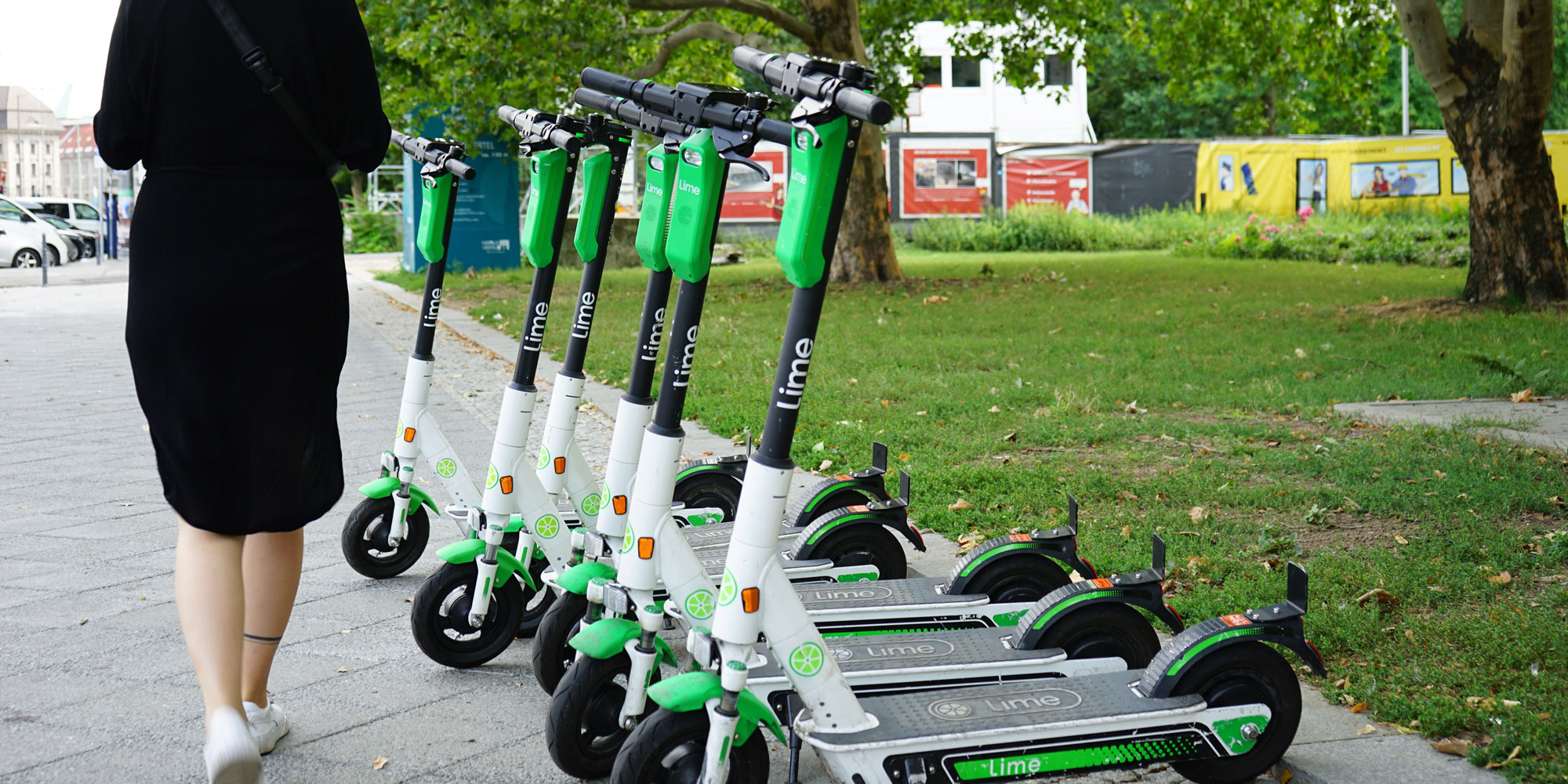
According to the CDC, 3 people are injured on e-scooters every day, and 15% of them experience traumatic brain injuries (Source: The Verge). Riders of e-scooters cite “surface conditions” such as potholes or pavement irregularities as the cause of their accident (Source: Car and Driver). For the scope of this project, we want to improve the safety of electronic scooters by increasing users’ awareness of their surrounding environment.
Our audience is college students and other adults using scooters as a mode of transportation (as opposed to using them for fun). The situations we plan to augment are scooter rides to class, work or tourist activities. Our target environment is urban streets and sidewalks and college campuses.
Preliminary Observations
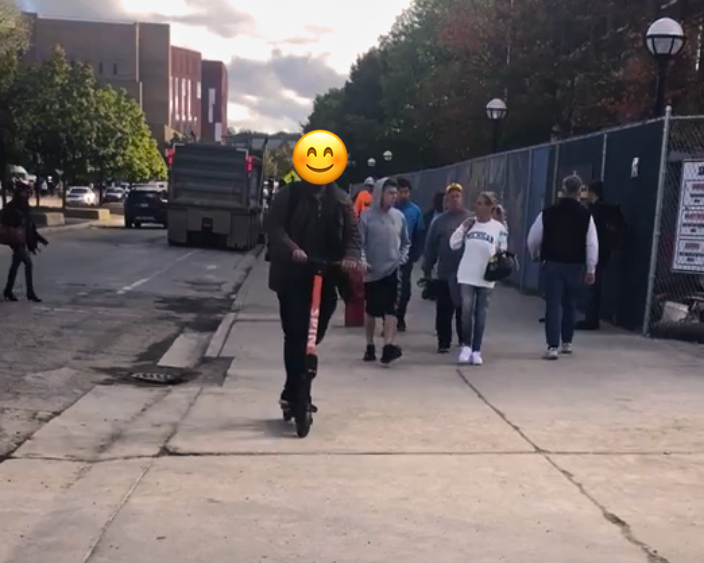
In order to more fully understand the experience of using scooters in an urban environment, we conducted preliminary observations in two ways: (1) Contextual observations of people driving scooters around Ann Arbor, and (2) Driving scooters ourselves. Contextual observations were made at different times across a 3-day period at 3 locations in Ann Arbor.
Through our observations we found:
Scooter use is highly weather-dependent
- We saw zero people riding scooters when it rained even though many people were still out walking.
All drivers seemed highly attentive to what was in front of them.
- All of the drivers we observed kept both hands on the scooter handlebars at all times.
- We only saw one person take his eyes off the road and look down at the scooter while driving, and even that was very brief. Everyone else had their heads up and eyes forward.
- From our driving experience: Scooters feel very fast so the risk of hitting something seems high. We also kept our eyes on the road at all times. Looking down while moving forward felt unsafe.
Stability is impaired near crowds and other road hazards.
- Though some drivers tried to make a wide berth around pedestrians, when the sidewalks were crowded drivers were forced to slow down almost to a stand-still.
- The best drivers we observed were able to stay on their scooters at slow speeds, but no one was able to stay on when it came to a full-stop.
- Most people kicked the ground when the scooter slowed down, as if they were on a skateboard. Some jumped off and pushed the scooter.
- From our driving experience: Maneuvering around people requires slowing down. Balancing at slow speeds is very difficult because they get wobbly. Pushing the scooter was also difficult because the wheels have resistance when the motor isn’t engaged.
Pedestrians
- Though scooters make noise, it’s quiet in the context of other road/environmental noise.
- Many pedestrians wear headphones so they’re not able to hear scooters.
- We observed quite a few pedestrians appearing surprised when a scooter passed them on the sidewalk from behind.
Road drivers appeared to have more scooter experience than sidewalk-only drivers.
- Though most people drove on sidewalks, we observed drivers on roads too, including busy ones like State St.
- Those we observed on roads appeared to be more confident or have more driving skill than those who kept to the sidewalks.
- Roads and sidewalks near our observation points were under construction, which could have affected where people chose to drive their scooters.
Scooters were used as transit by a narrow age group.
- Of the 23 scooter drivers we observed, all but two seemed to be using the scooter as transportation with a specific destination in mind. (The other 2 seemed to be riding them for fun.)
- Although most people we observed were students, people also used scooters to get to work (evidenced by their clothing and direction).
- We only observed one driver who was clearly under age 18. Everyone else appeared to be at least 18 years old. We also did not observe any drivers above middle-age.
- Gender did not seem to be a factor.
Artifacts: Drivers had bags, but not helmets.
- Most drivers (or other riders) wore backpacks or a bag with a strap, including non-students. None carried items in their hands.
- Zero people we observed wore helmets.
Ideation Process
We arrived at this project scope through a series of brainstorming sessions. First we sketched ideas independently. Then we met to discuss them and narrowed our scope to bicycle and scooter safety. We repeated this process twice more, narrowing our scope and project concepts each time. Between team meetings we also conducted observations.
Concepts
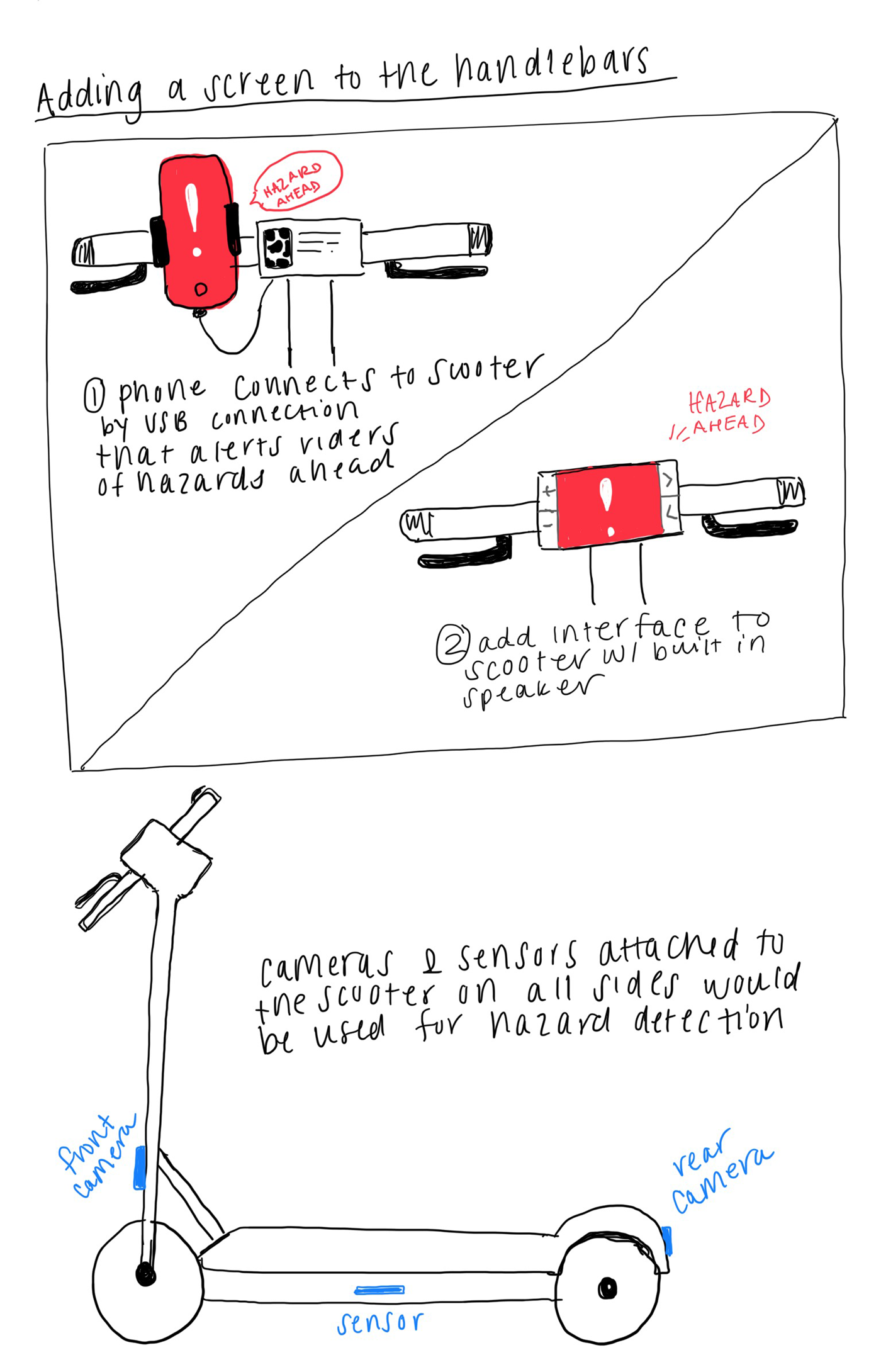
Concept 1: Smartphone integration with cameras on scooter/screen-based UI
This concept explores how to use a screen-based technology to provide information about the rider’s surroundings. An interface can be added to the scooter by either using the rider’s phone or a built-in screen. Simple graphics, color, and sound will be used to alert the rider of hazards on the road. Screens are already a part of the e-scooter experience, so the integration is meant to feel natural and not create too much external stimulus. Riders would also have the option to display GPS navigation or live camera feeds as they ride.
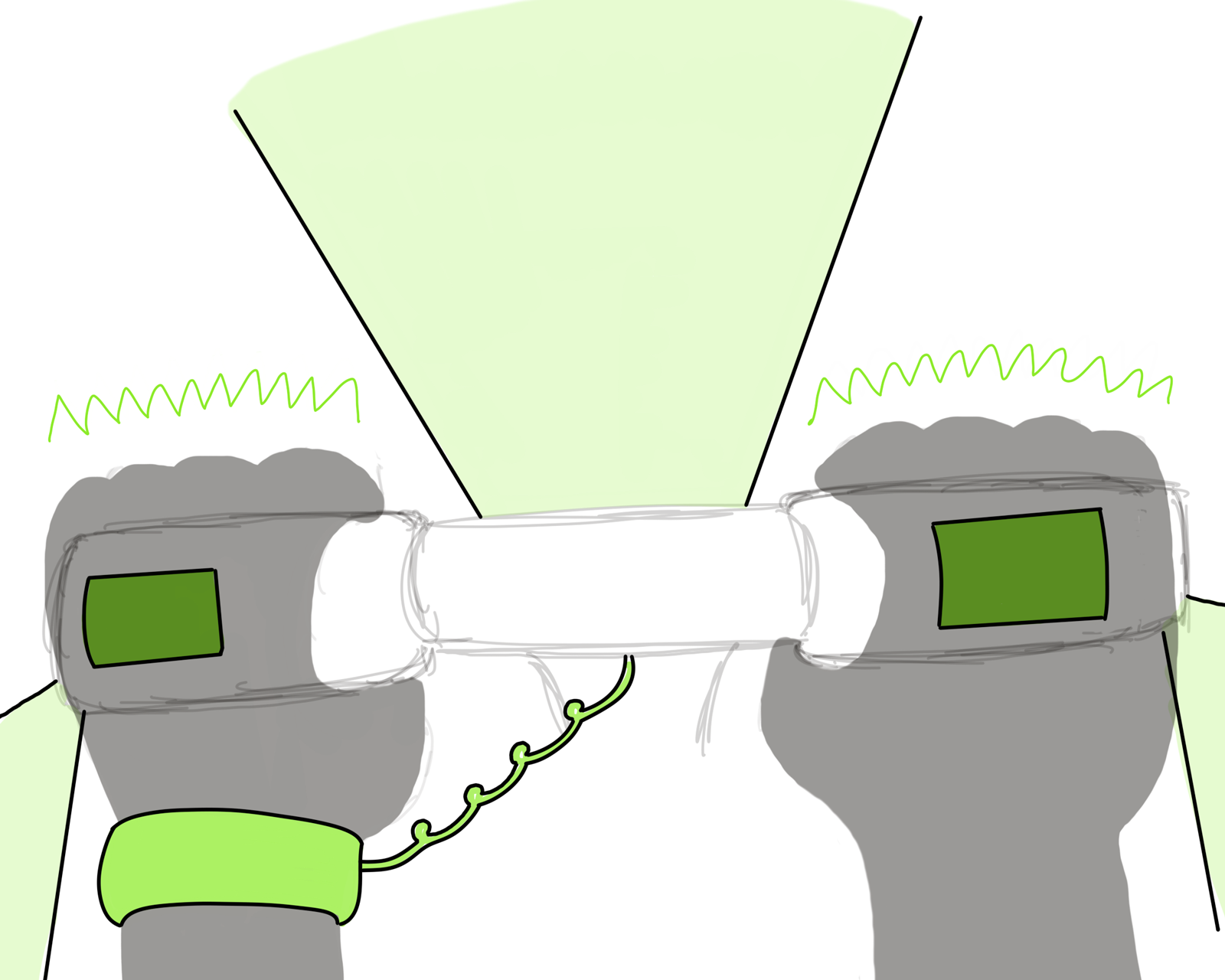
Concept 2: Sensors with Haptic Feedback
This concept explores how to provide information about the rider’s surroundings without requiring the use of screens or audio. Using sensors to detect potential surrounding hazards the scooter then communicates with the rider either through the handlebars themselves or through an additional worn wristband or peripheral. Mapping the vibration type, frequency, and location will be important to conveying information accurately. Special considerations will need to be made in order to make sure that alerts are strong enough to be felt over the ambient vibrations from operating the scooter, but not so strong as to trigger a startle response.
Concept 3: Augmented Reality Glasses
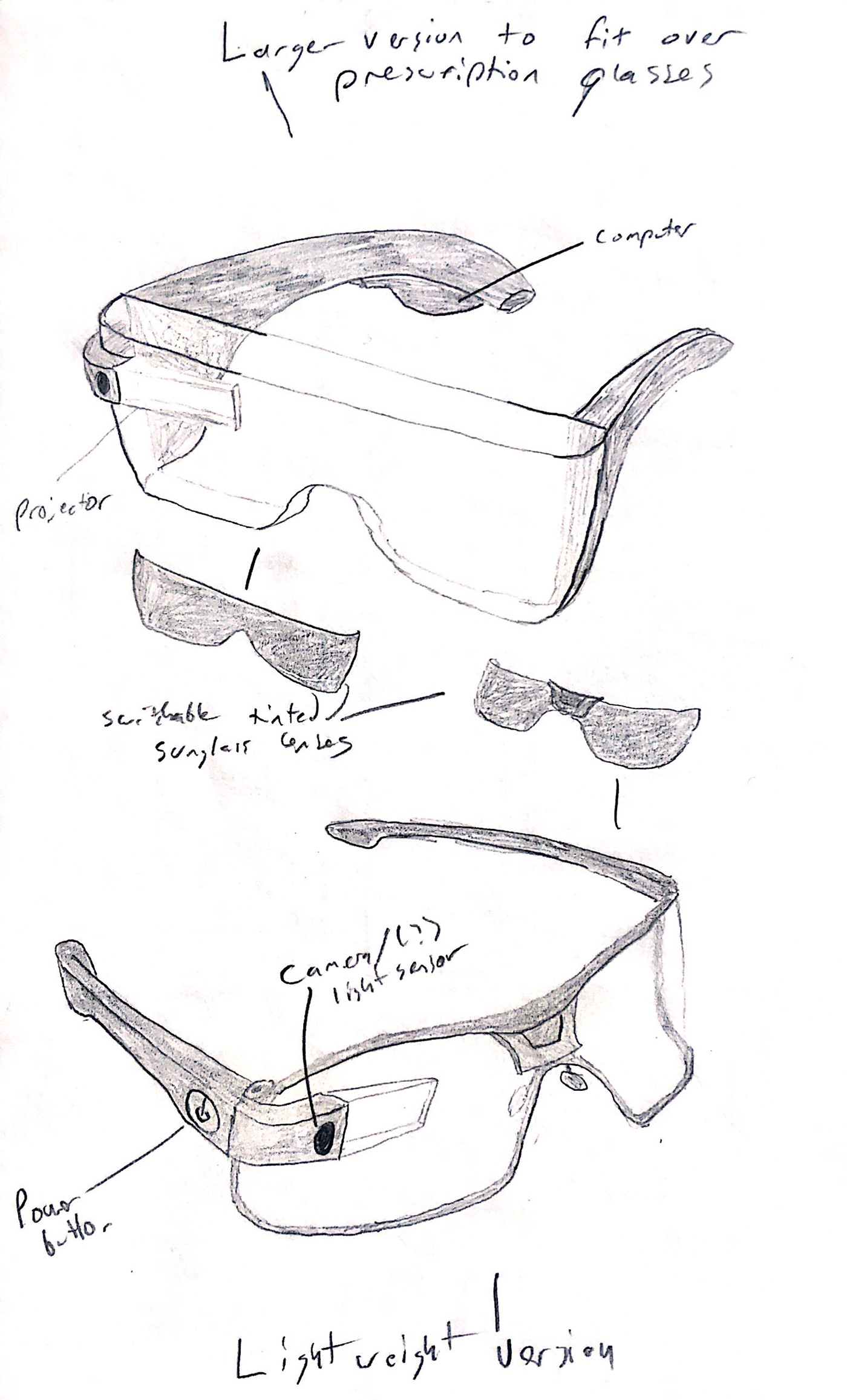
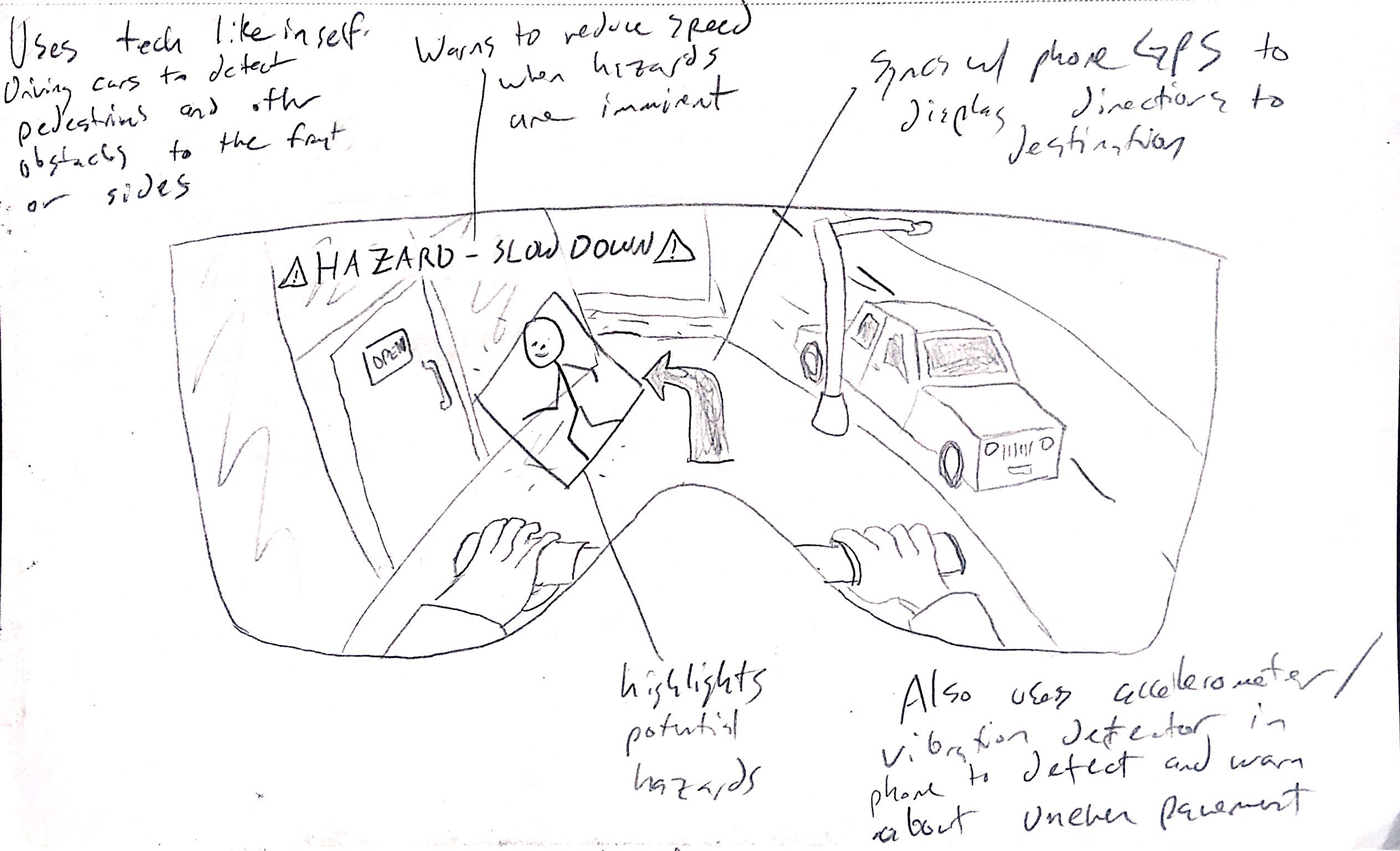
These smart glasses are specifically designed to be worn while riding a scooter (or bike?), to provide information to the rider without requiring them to take their eyes off the path ahead of them. They come in two styles, one designed to be worn alone and one designed to fit over prescription glasses. They also feature interchangeable untinted and tinted UV-protected lenses to negate the need for additional sunglasses while wearing them. The onboard computer connects with the user’s smartphone to gather location and movement data. Directions to destinations set in the phone’s map application will be displayed on ‘screen’. The glasses have a built-in camera or sensor that utilizes the same sort of computer vision technology being used in autonomous vehicles to identify potential hazards and warn the rider of them visually (with optional audio cues). The brightness of the display is also automatically adjusted according to the ambient light level detected by the camera. Using the phone’s motion sensor, it can also detect uneven terrain, and it aggregates this data and can warn riders when potential difficult terrain is approaching. (optional) They can also connect with possible sensors in the scooter to detect hazards in the rider’s blind spot.
Next Steps
Our next steps involve better understanding the specific needs of frequent and intermittent users of rental scooters and how their situations differ. Our observations also show a distinct difference in confidence and desired riding environment (street vs sidewalk). Additional considerations or functionality may be desired for one or both of these segments. We are planning to use surveys in order to learn more about the general population of rental scooter riders and interviews to delve deeper into understanding the specific use cases and pain points. We hope that the use of the survey will provide us with a pool of interview and user testing participants for future studies and tests throughout the semester.